Home Service Contractor CRM Pipeline for Remodeling Leads
Introduction
A home service contractor CRM pipeline matters when remodeling demand is active but harder to read. Final sales alone do not show whether good leads are leaking at first response, estimate booking, proposal, or follow-up.
For Home Service Contractors, that visibility matters because crews are often in the field when homeowners call, send photos, submit forms, or ask whether a project is worth pricing. If those requests sit in voicemail, personal text threads, sticky notes, and heroic memory, the pipeline is not a pipeline. It is a scavenger hunt with invoices at the end.
The goal is simple: track every remodeling lead from first inquiry to estimate, proposal, decision, and next action.
Why Remodeling Leads Are Harder to Judge in Mid-2026
Remodeling demand can look healthy while individual homeowners still move carefully. NAHB reported recent gains in residential remodeling spending and an encouraging longer-term outlook, but that does not mean every inquiry is ready to sign immediately.

A useful pipeline separates real project interest from early planning, price checking, and stalled follow-up.
That is where sales totals mislead. A lead source may appear weak when the real problem is delayed response. A close rate may look poor when too many estimate appointments were never booked.
Contractors need a way to see each step, not just the final result. Otherwise the team debates opinions: "The leads were bad," "the phones were slow," or the classic operational masterpiece, "I think someone called them."
What a Contractor CRM Pipeline Should Track
A practical CRM and Pipeline setup is not just a contact list. It is an operating view of source, job type, location, urgency, owner, stage, and next action.
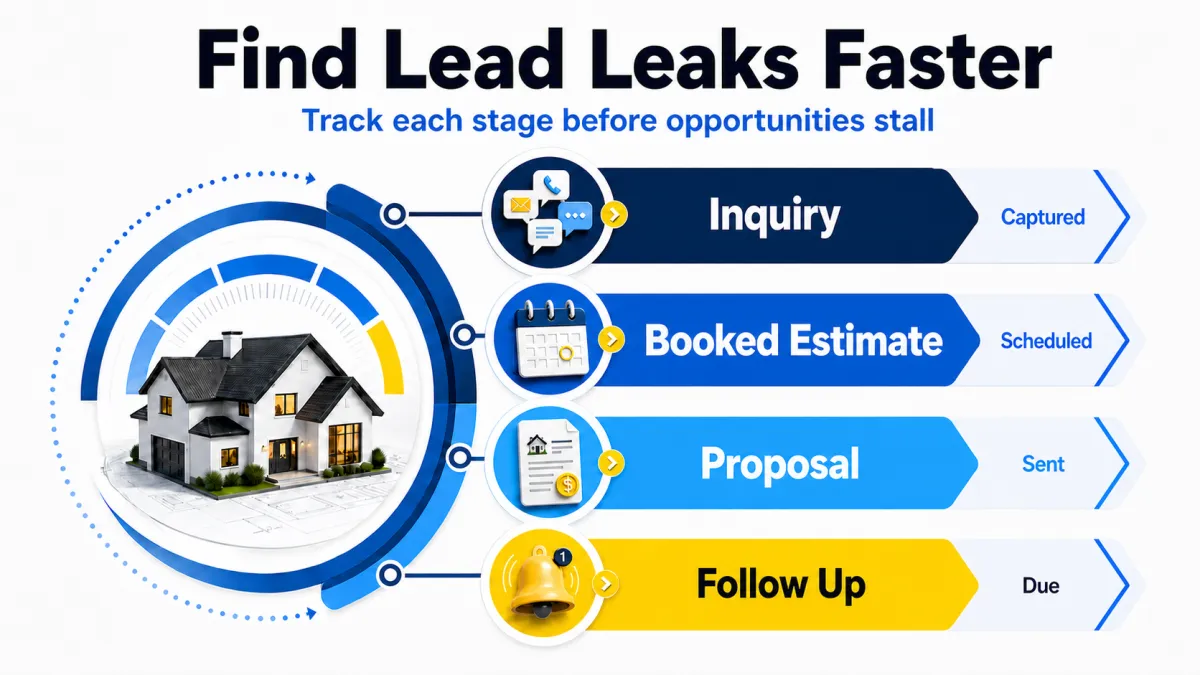
For a remodeling or home service company, the core stages usually include:
- New inquiry received
- First response completed
- Estimate or appointment requested
- Estimate booked
- Estimate completed
- Proposal sent
- Follow-up due
- Won, lost, canceled, or no-show
Each stage should answer one question: what has to happen next? If the answer is unclear, the lead is not being managed. It is being stored.
Responsibility matters too. A deck inquiry may belong to the office manager for intake, the estimator for a site visit, and the owner for proposal follow-up.
The Lead Stages That Reveal Where Opportunities Leak
The most useful contractor pipeline stages show movement. They also show where movement stops.
Start with inquiry to first response. If homeowners wait too long, the source may get blamed even though the lead was fine. Qualified Remodeler makes the same practical point for remodelers: do not judge lead sources by sales alone. Then look at first response to booked appointment. If callers ask for pricing but do not land on the calendar, the issue may be qualification or appointment setting, not demand.
Next, review estimate completed to proposal sent. Unclear scope, missing photos, and delayed paperwork can slow the process. Finally, track proposal to follow-up and decision. Many remodeling leads compare, pause, ask family members, or simply get distracted.
The NAHB Remodelers group exists because remodeling is a distinct business discipline, not just "construction with nicer before photos." The sales process has its own rhythm.
How Speed-to-Lead and Appointment Setting Affect Pipeline Quality
Speed-to-lead affects how accurately you can judge every other number in the pipeline. If a homeowner calls about a bathroom remodel and nobody responds until tomorrow afternoon, the lead source is not the first suspect.

Structured intake gives the contractor team better context and clear ownership before the estimate conversation starts.
Calls from homeowners while crews are in the field are one reason an AI Voice Receptionist can help. It can answer approved basic questions, capture project details, and route urgent requests when the team cannot pick up.
The pipeline should separate missed response, unbooked inquiry, canceled appointment, no-show, bad-fit lead, and proposal follow-up. One big "lost lead" bucket hides the fix.
NAHB's Remodeling Market Index also treats leads, inquiries, and backlog as future indicators, which supports looking beyond closed sales. Pipeline discipline fits that owner-level need.
What to Capture Before an Estimate Conversation
Good intake makes estimates cleaner. It also protects the team from chasing vague requests.
Use Forms and Surveys or structured notes to capture project type, location, timeline, contact method, urgency, photos, and any budget range the homeowner voluntarily provides. The point is to understand fit and readiness, not interrogate someone for sport.
The same intake should connect calls, forms, chats, and messages in one visible place. Unified Inbox and Messaging helps because a homeowner may call first, send photos later, and reply from another channel.
Before an estimate conversation, the team should know:
- What work the homeowner is asking about
- Where the property is located
- How soon the homeowner wants to move
- Whether photos or measurements were shared
- Who owns the next action
- When the next follow-up is due
That information makes the estimate call more useful for both sides.
A Simple Weekly Pipeline Review for Contractor Owners
A pipeline only helps if someone reviews it. Weekly is a good rhythm for most small contractor teams because it catches stale follow-ups without turning management into a spreadsheet recital.

A weekly pipeline review helps owners find overdue follow-up before good opportunities disappear.
Review new leads first. Which sources created inquiries? Which ones received a response? Which ones still need details? Then look at unbooked estimates, canceled appointments, overdue follow-ups, and quiet proposals.
Compare lead sources by stage movement, not only sales. One source may create fewer but better booked appointments. Another may create many inquiries but few estimates because expectations, geography, or project type are mismatched.
Finally, decide what to change. The fix might be faster routing, tighter intake questions, reminders, better booking rules, or clearer stage ownership.
What a Better Remodeling Lead Workflow Looks Like
A better workflow starts before the lead becomes a mystery.

A clearer workflow helps the team connect project details, ownership, and follow-up.
The inquiry arrives by call, form, chat, or message. The system captures contact details, project type, location, urgency, and source. The lead is categorized and assigned. If an appointment is needed, the booking step is visible.
This does not need to be complicated. The best pipeline for a small contractor is usually the one the team will actually use.
When the workflow is working, owners can ask better questions. Where are estimate requests slowing down? Which sources create booked appointments? Which proposals need a nudge? Those answers beat blaming "the market" whenever the numbers feel strange.
FAQ
What is a home service contractor CRM pipeline?
A home service contractor CRM pipeline is a stage-based workflow that tracks each lead from inquiry through response, appointment, estimate, proposal, follow-up, and final outcome.
How should contractors track remodeling leads?
Contractors should track source, job type, location, urgency, contact details, assigned owner, current stage, next action, and follow-up date.
Which pipeline stages matter for estimate requests?
The most useful stages are inquiry received, first response, appointment requested, estimate booked, estimate completed, proposal sent, follow-up due, won, lost, canceled, and no-show.
Why should contractors measure more than final sales?
Final sales do not show where good opportunities stalled. Stage tracking reveals whether the issue is response time, booking, qualification, proposal timing, or follow-up.
How does speed-to-lead affect home service appointments?
Fast response helps homeowners get answers while the project is still active in their mind. Slow response can make a good lead look weak because the homeowner may move on.
What information should contractors collect before an estimate?
Collect project type, property location, timeline, contact preference, photos if available, urgency, source, and the next action owner.
How often should a contractor review the CRM pipeline?
Most small contractor teams should review the pipeline weekly, with faster checks for urgent inquiries, overdue follow-ups, and appointments scheduled for the next few days.
Where eBreeze Fits
eBreeze Marketing Solutions helps contractors turn scattered inquiries into organized lead workflows. We map intake questions, pipeline stages, assignment rules, reminders, booking steps, and follow-up visibility so the owner can see where opportunities need attention.
When remodeling demand shifts, guessing from final sales numbers is not enough. See how eBreeze supports Home Service Contractors.
