
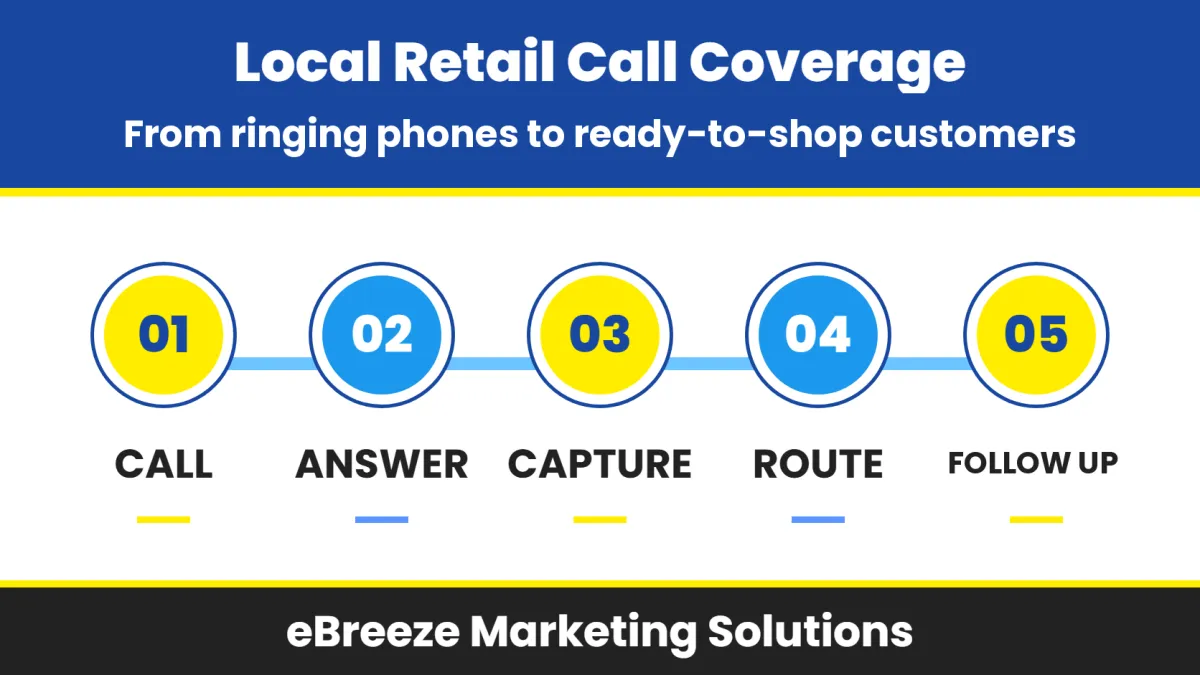
Local Retailer Call Coverage Before School Shopping
Local retailer call coverage gets very hectic during the back-to-school season. Parents, students, and teachers are trying to decide where to shop, what is in stock, when the store is open, and whether a trip is worth it.
For Local Retailers, that seasonal rush usually lands at the exact moment staff are helping customers in the aisle, ringing sales, restocking displays, or answering the same three questions for the tenth time before lunch. The phone still rings. The shopper still wants an answer. Voicemail, heroic as it is at collecting regret, does not help much when someone is choosing where to go next.
The goal is not to replace the store team. It is to answer common questions, capture useful details, and route real buying intent before it disappears.
Why Seasonal Retail Calls Get Missed
Back-to-school traffic creates a strange kind of pressure. The store may be busy in a good way, but that does not mean every opportunity is being handled well. The Census Bureau's August 2026 back-to-school feature estimated 54.4 million K-12 students returning to classrooms, so practical shopping questions can stack up fast.
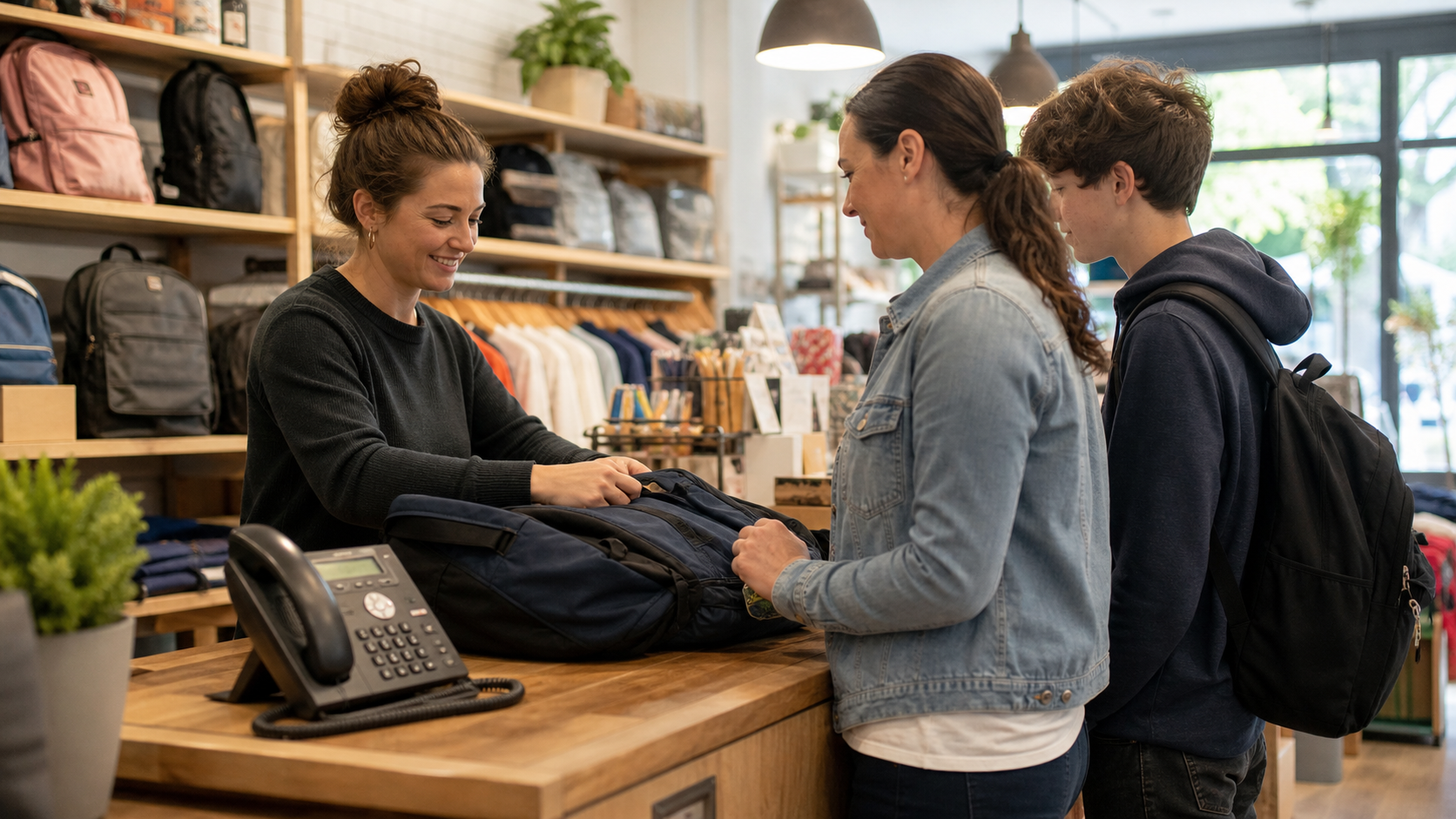
Seasonal shoppers need attentive in-store help while staff balance counter service and incoming questions.
A staff member may be answering product questions in person while another checks a register, straightens shelves, or finds sizes. Meanwhile, callers ask about school supplies, apparel, shoes, electronics, accessories, store hours, pickup options, promotions, returns, and holds.
The U.S. Census Bureau's June 2026 advance retail report showed retail and food services sales at $768.6 billion, which is a useful reminder that retail demand does not pause because the front counter is busy. Seasonal shoppers often act quickly, and a missed call can become a missed visit.
Not every call is urgent. The store still needs a better filter than "hope someone can grab it."
What Local Retailer Call Coverage Should Handle
Good call coverage handles questions that do not require a manager to stop everything.
An AI Voice Receptionist can greet callers, identify the store, answer approved common questions, and collect useful details: name, phone number, item interest, urgency, pickup timing, and who should follow up.
That structure matters because "someone called about shoes" is not a follow-up plan. It is a breadcrumb wearing a tiny hat.
The system should be clear about what it can answer and when human help is needed. Product availability, special orders, return questions, and pricing details should follow approved store rules.
Back-to-School Questions Worth Preparing For
Back-to-school calls usually fall into patterns. Preparing those patterns makes the phone workflow calmer.

Clear product categories help retailers prepare useful answers for seasonal shopper questions.
Start with store basics. Hours, location, directions, parking, pickup windows, and seasonal hours should be consistent everywhere shoppers find the business. Google's Business Profile guidance tells businesses to provide regular customer-facing hours and allows seasonal hours when applicable.
Next, map the seasonal product questions. A local retailer may need call paths for school supplies, uniforms, shoes, backpacks, electronics, dorm items, sports gear, teacher supplies, or specialty products. The categories vary, but the pattern is the same: callers need a quick answer or a useful next step.
Finally, prepare promotion and hold rules. If shoppers ask about a sale, coupon, return window, or hold request, the answer should be truthful, current, and easy for staff to honor. The FTC's small-business advertising guidance says advertising should be truthful, non-deceptive, and supported by evidence.
How an AI Voice Receptionist Supports the Store Team
An AI receptionist works best as front-line support. It answers what has been approved, captures what matters, and escalates what deserves a person.
That workflow also lines up with the SBA's practical small-business guidance to improve customer service, which includes automating phone service to route calls to the right department.
That is especially useful during short seasonal windows. Staff can stay present with in-store customers while callers still get a response. A parent looking for a backpack size can leave the exact item request. A teacher asking about bulk supplies can be routed differently from a student asking about store hours.
The system should also avoid pretending it knows what it does not know. If inventory changes by the hour, the safer answer may be to collect item details and send the request to the store team.
The result is an organized front door for calls, not a magic sales machine. It helps the team see which conversations need attention first.
Where Call Capture Fits With Follow-Up and Message Tracking
Call coverage becomes more valuable when the captured details go somewhere useful.
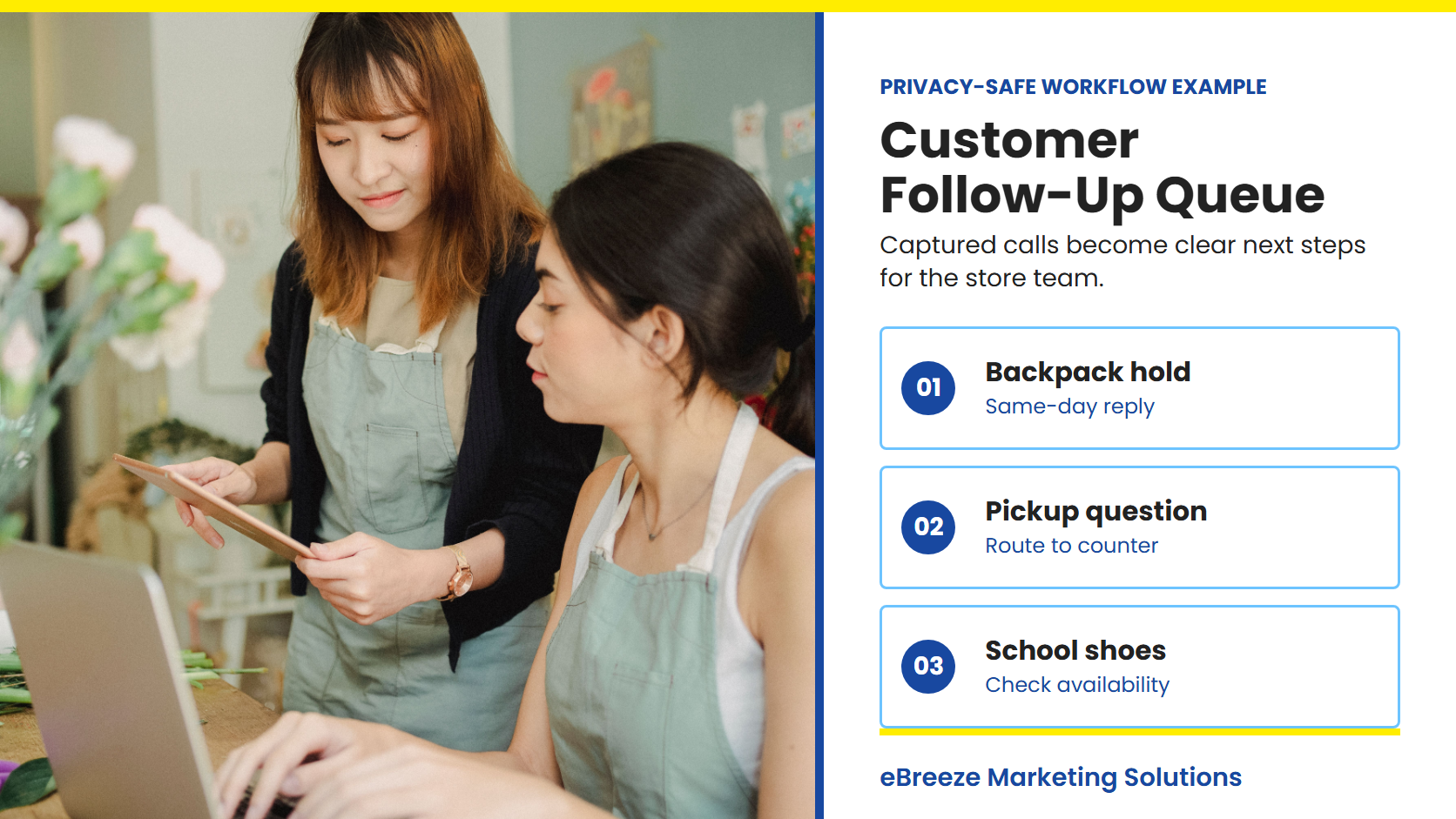
Captured calls become clear next steps instead of scattered notes and good intentions.
A CRM and Pipeline setup can turn caller details into a simple queue by request type, urgency, and owner. A hold request can be marked for same-day review, while a product question can go to the right department.
Unified Inbox and Messaging also matters because retail conversations do not stay in one lane. A shopper may call first, text later, submit a form, and then reply to a pickup confirmation. Keeping those conversations visible helps the team avoid duplicate work and missed replies.
For stores that need better intake, Forms and Surveys can collect structured shopper details for special orders, holds, product interest, and follow-up preferences.
A Practical Back-to-School Call Coverage Checklist
Before the busiest week hits, review the call workflow like an operational checklist.
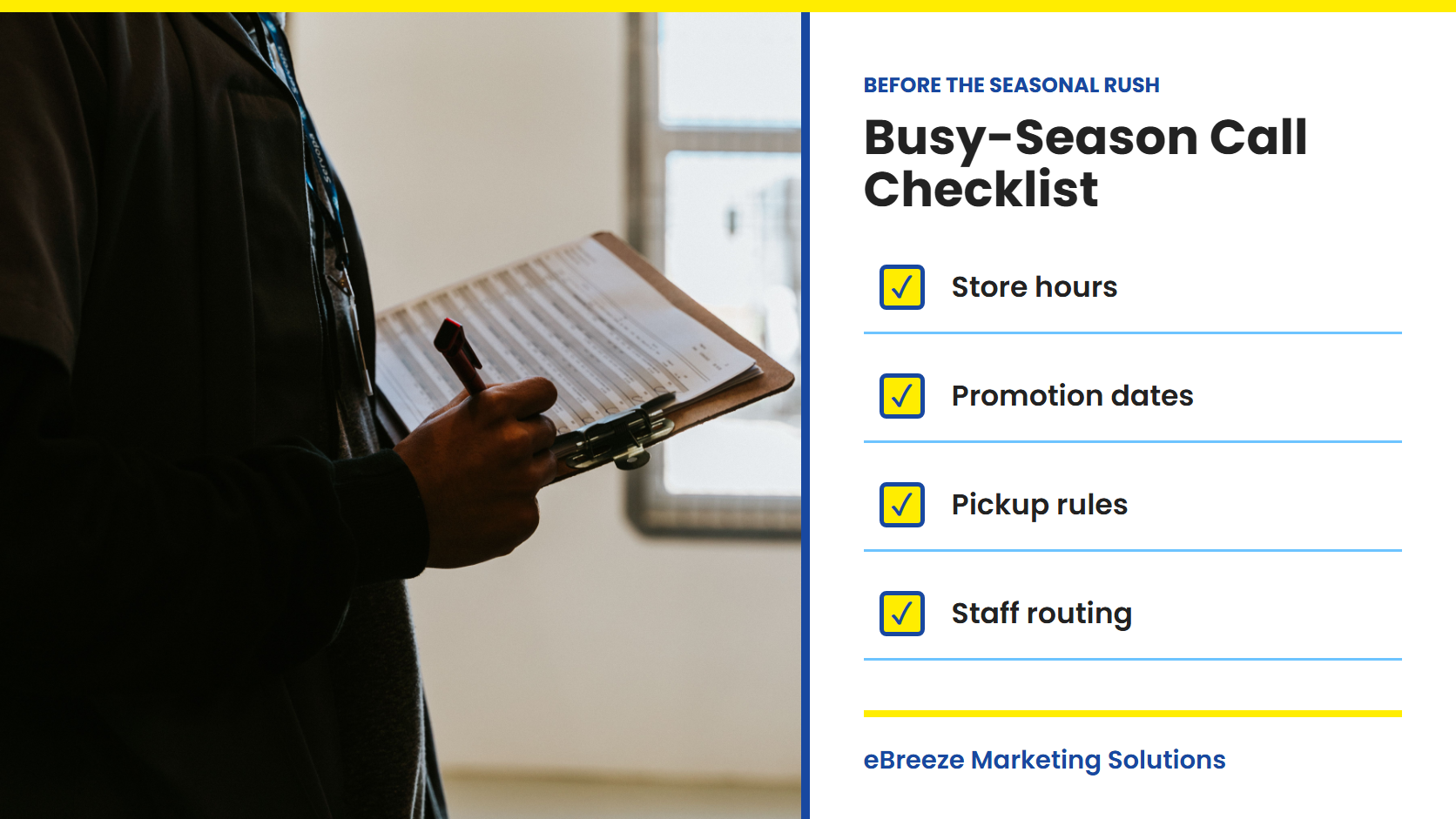
A visible checklist makes seasonal call coverage easier to review before the rush begins.
Confirm current hours, seasonal hours, pickup rules, return basics, promotion dates, and product categories. Decide which answers are safe to provide automatically and which should become a staff task.
Then review the follow-up queue daily during the seasonal window. A missed reply after a caller asked for a hold is the kind of tiny process failure that quietly steals a store visit.
If past seasonal shoppers or prior buyers should hear from the store again, Customer Reactivation can support useful reminders without turning the customer list into a generic blast.
What a Better Seasonal Retail Workflow Looks Like
A better workflow is simple.
First, the shopper calls with a time-sensitive question. The system answers approved basics or captures the details. Next, the request lands in a queue with context: who called, what they wanted, how urgent it is, and who should respond.
Then the team follows up where it matters most. Some callers only needed hours. Others need a product check, pickup, a hold, a store visit, or a larger conversation.
That is what local retailer call coverage should do: reduce call chaos and make shopper intent easier to act on.
FAQ
What is local retailer call coverage?
Local retailer call coverage is a system for answering common store calls, collecting shopper details, and routing high-intent requests when staff are busy with in-store customers.
How can local stores answer more calls during busy shopping seasons?
Stores can prepare approved answers for common questions, use an AI receptionist for front-line call handling, and route requests into a follow-up queue for staff review.
What back-to-school questions should retailers prepare for?
Retailers should prepare for questions about hours, product categories, availability checks, pickup, holds, returns, promotions, directions, and seasonal shopping deadlines.
Can an AI Voice Receptionist help with inventory questions?
It can collect the exact item request and provide approved answers. If live inventory changes quickly, the safer workflow is to route the request to staff for confirmation.
How should retailers handle calls about holds or pickup options?
They should define clear hold and pickup rules, capture contact details, and route time-sensitive requests to someone who can confirm availability.
How does call coverage connect to retail follow-up?
Captured call details can move into a CRM, inbox, or follow-up queue so staff can see request type, urgency, owner, and next action.
What should local retailers verify before using automated call handling?
They should verify hours, promotions, return basics, pickup rules, approved product categories, routing rules, and the exact claims the system is allowed to make.
Where eBreeze Fits
eBreeze Marketing Solutions helps local stores turn seasonal calls into organized customer conversations. We map approved answers, intake questions, routing rules, follow-up queues, and message tracking.
When back-to-school shoppers are comparing stores, fast clarity can matter more than fancy marketing language. See how eBreeze supports Local Retailers.
