Pool Customer Reactivation Before Summer Winds Down
Pool customer reactivation is a practical way to find late-summer opportunity, which is probably why it gets ignored until the schedule has holes big enough to park a service truck in.
For Pool, Spa & Outdoor Living businesses, the customer list already holds people who bought equipment, asked about service, visited the showroom, installed a patio feature, or needed seasonal help earlier in the year. As summer winds down, many of those customers may still need maintenance reminders, safety-minded prompts, accessories, repair conversations, spa supplies, lighting upgrades, or early planning for bigger outdoor-living projects.
That does not mean every past customer should get the same cheerful blast. A useful reactivation campaign feels timely, specific, and easy to answer.
Why Past Pool and Outdoor Living Customers Go Quiet
Past customers usually go quiet for ordinary reasons. Peak-season demand crowds the calendar. Service teams move from stop to stop. Showroom staff answer questions, quote products, and handle urgent needs.

Late-summer outreach works best when it is tied to visible seasonal needs.
The customer may still be interested. They may simply have no prompt to reach back out.
A family that bought patio furniture in spring may need covers, lighting, or storage advice later. A spa owner may need a water-care reminder. A pool customer may need a safety check before a late-season gathering. The Pool Safely campaign keeps pool and spa safety topics visible during swim season, which makes late summer a practical time for helpful reminders.
The problem is not lack of opportunity. It is lack of organized timing.
What Pool Customer Reactivation Should Accomplish
Customer Reactivation should bring the right past customers back into a useful conversation. The goal is not to squeeze one more sale out of everyone who ever bought a test strip. That is how a customer list becomes a noise machine. Very impressive. Terrible instrument.
A good plan should accomplish three things:
1. Remind customers about a relevant late-summer need.
2. Segment service, product, spa, patio, repair, accessory, and upgrade opportunities.
3. Make the next step simple, such as requesting service, asking a question, confirming interest, or visiting the showroom.
When the campaign is useful, the message feels like service. When it is generic, it feels like another business discovered the "send all" button.
Late-Summer Moments Worth Triggering Outreach Around
Late summer gives pool, spa, and outdoor living businesses several natural reasons to reach out.

Seasonal outreach is easier to answer when it connects to how customers actually use their spa.
Water care is one. The CDC Healthy Swimming site points readers toward healthy and safe swimming habits and resources for aquatics professionals. A business should not turn a marketing message into technical pool-care instructions, but it can remind customers to think about water condition, routine care, and professional support before a minor issue becomes an urgent one.
Safety-minded reminders are another. CPSC's Pool Safely guidance emphasizes supervision, swimming skills, drain awareness, barriers, and emergency preparedness. Those topics can support careful customer education when the business keeps the wording practical and avoids pretending a reminder replaces professional inspection, local requirements, or customer judgment.
Service openings can also trigger outreach. Weather shifts, cancellations, and slower late-season weeks may create room for maintenance, troubleshooting, or small upgrade work. This is where SMS Messaging can help with time-sensitive reminders when the business has the right permission and preference process in place.
How to Segment Past Customers Before Sending Anything
Segmentation is what keeps customer reactivation from becoming a one-size-fits-none campaign.

A useful reactivation message can bring a past showroom conversation back to the table.
Start with the customer history you already have. Separate service customers from product buyers. Separate spa owners from pool owners. Separate patio, furniture, lighting, and outdoor kitchen shoppers from customers who only needed a one-time repair. If equipment type, purchase date, service history, or prior conversation notes are available, use them.
A CRM and Pipeline setup can help the team turn those differences into manageable lists:
- Past service customers who may need late-season maintenance.
- Spa customers who may need water-care or accessory reminders.
- Outdoor living shoppers who discussed lighting, furniture, shade, or upgrades.
- Repair customers who may need follow-up after a prior issue.
- Dormant leads who asked for quotes but never moved forward.
The point is not perfect data. The point is better-than-random outreach.
Message Ideas That Feel Useful Instead of Pushy
Useful reactivation messages are short, specific, and respectful. They should identify the business, reference the reason for the reminder, and offer one clear next step.
For service customers:
```text
Hi Taylor, this is ClearWater Pool & Spa. We are checking in with late-summer service customers this week. Would you like us to review available maintenance times before the season gets away from you?
```
For spa owners:
```text
Hi Morgan, this is ClearWater Pool & Spa. Late summer is a good time to review spa water care and supplies. Would you like help checking what you may need for the next few weeks?
```
For patio or outdoor-living customers:
```text
Hi Alex, this is ClearWater Outdoor Living. You asked about patio lighting earlier this season. Would you like us to send a few late-summer options or schedule a quick showroom visit?
```
These are examples, not scripts to copy blindly. The message should match the customer's history, the business's approved communication process, and the channel the customer agreed to use. Email Marketing may fit educational reminders, care tips, showroom invitations, and larger seasonal planning. SMS may fit shorter, time-sensitive prompts. Either way, the customer should understand who is contacting them and why.
Where Customer Reactivation Fits in the eBreeze System
Customer reactivation works best when it is connected to the rest of the follow-up process.
First, eBreeze helps identify useful audience segments, such as service customers, spa owners, showroom visitors, quote requests, or outdoor-living prospects who have gone quiet.
Second, the campaign uses the right channel for the job. Email can explain options and seasonal reminders in more detail. SMS can ask a simple question or confirm interest when timing matters. Replies should not disappear into someone's phone while everyone else guesses what happened.
Third, every response needs ownership. A service request should move to the right staff member. A showroom question should be routed for product help. A bigger project conversation should be tracked as a future opportunity. The business does not need more messages. It needs messages that lead somewhere.
What a Better Late-Summer Reactivation Workflow Looks Like
A better workflow can stay simple.

A timely reminder can turn into a useful water-care conversation and a clear next step.
Start by reviewing one customer segment. Do not begin with the entire database unless you enjoy creating avoidable cleanup work. Choose one timely audience, such as past spa customers, recent service customers, or dormant patio-project leads.
Next, send a useful reminder with one next step. That next step might be requesting service, asking a question, reviewing an accessory, or confirming interest in a showroom visit.
Then track replies and outcomes. Who asked for service? Who requested product information? Who should be followed up with later? Who should be removed or placed into a different communication path?
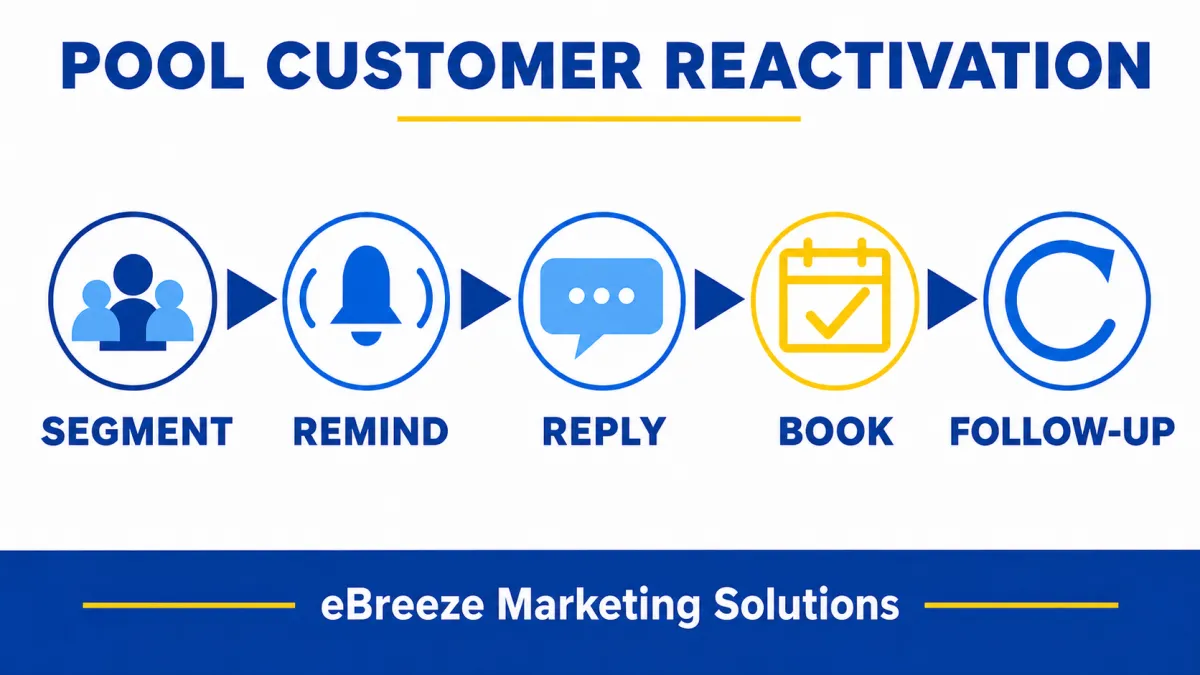
The workflow looks like this:
1. Choose a past-customer segment.
2. Match the message to a timely late-summer need.
3. Send through the right channel.
4. Route replies to the correct person or queue.
5. Record service requests, showroom interest, future follow-up, and no-response contacts.
That is pool customer reactivation doing its job.
FAQ
What is pool customer reactivation?
Pool customer reactivation is planned follow-up with past pool, spa, patio, and outdoor living customers who may still need service, supplies, reminders, upgrades, or future project help.
When should pool and spa businesses reactivate past customers?
Late summer is a practical time because customers may still be using pools, spas, patios, and outdoor spaces while also starting to think about maintenance, accessories, repairs, and end-of-season planning.
What should a late-summer pool service reminder include?
It should identify the business, explain the timely reason for the reminder, and offer one clear next step such as requesting service, asking a question, or reviewing available appointment times.
How can outdoor living businesses bring past customers back?
They can segment customers by prior interest, such as patio furniture, lighting, shade, outdoor kitchens, or project quotes, then send relevant reminders or showroom invitations tied to that history.
Should pool businesses use email, SMS, or both for reactivation?
Both can work when used appropriately. Email is useful for detail, education, and seasonal planning. SMS is better for short, time-sensitive prompts when consent and preferences are handled properly.
How can customer reactivation help fill late-summer schedule gaps?
It can surface past customers who are ready for maintenance, repairs, accessories, or small upgrades during weeks when cancellations, weather changes, or seasonal shifts create open capacity.
What customer information is useful before sending reactivation messages?
Useful information includes service history, equipment type, purchase history, prior quote requests, product interest, last contact date, preferred channel, and the next action recorded by the team.
Where eBreeze Fits
eBreeze Marketing Solutions helps pool, spa, and outdoor living businesses turn quiet customer lists into practical follow-up systems. We map the customer segments, message timing, reply handling, and staff workflow so late-summer outreach is useful instead of scattered.
If past customers only hear from the business when they call first, repeat-service and upgrade opportunities can disappear quietly. See how eBreeze supports Pool, Spa & Outdoor Living businesses.
